
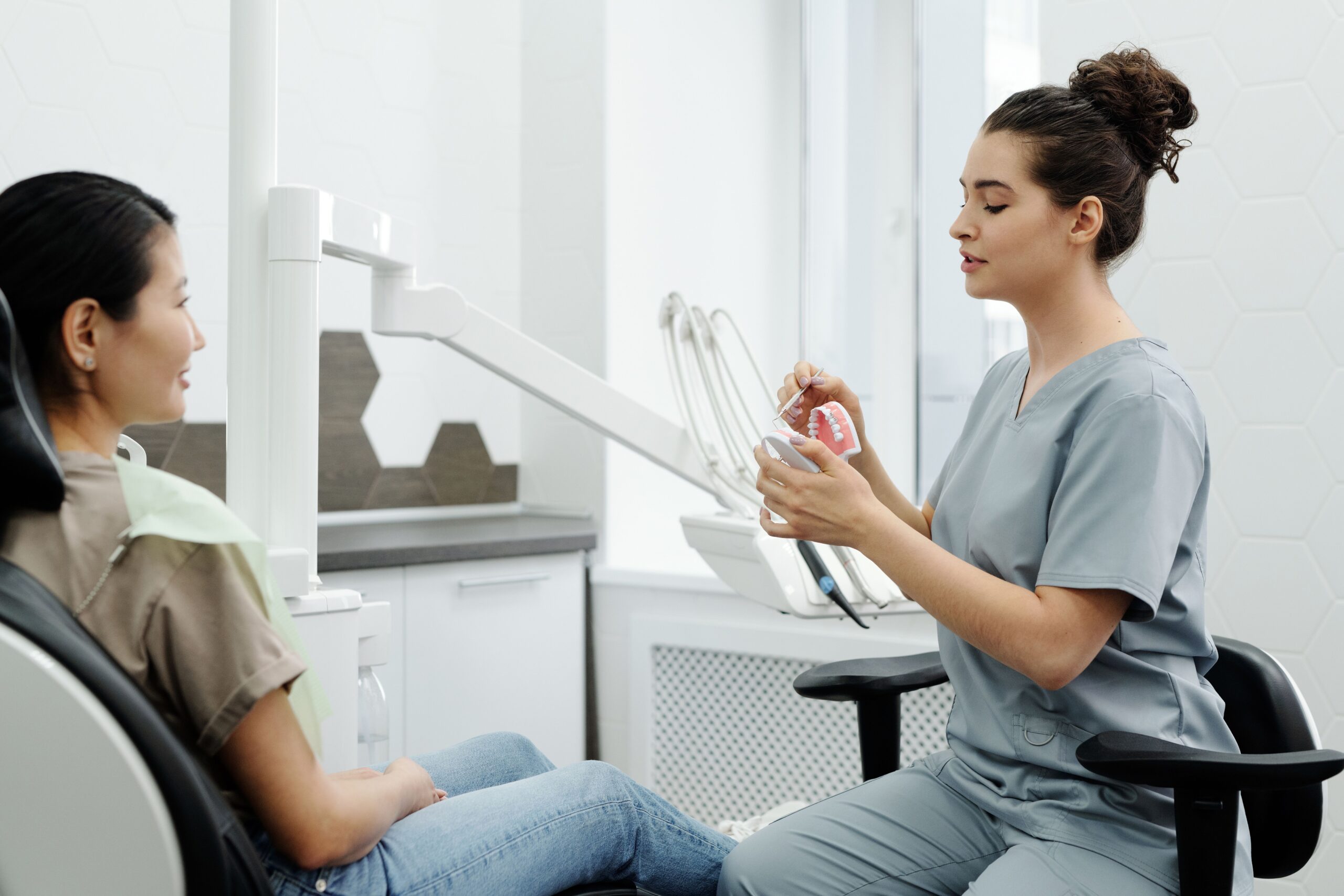
Fear of the dentist is a really common response that often develops through learned associations rather than rational thought. While avoidance may provide temporary relief, it can reinforce anxiety over time. The good news is that these fear responses can be changed, allowing you to approach dental treatment with greater calm, confidence and control.
“What the caterpillar calls the end of the world, the master calls a butterfly.”
– Richard Bach
For some people, booking a dental appointment is little more than another task on their to-do list.
For others, it can trigger days, or even weeks of anxiety.
Perhaps your heart starts racing when you think about making an appointment. Maybe you find yourself cancelling at the last minute, avoiding reminders, or putting off treatment despite knowing it’s important.
If this sounds familiar, you’re not alone.
Fear of the dentist (dentophobia) is one of the most common fears people experience, affecting approximately 36% of the population, adults as well as children (https://pmc.ncbi.nlm.nih.gov/articles/PMC5586885/). While many people feel a little bit nervous before a dental visit, for some the fear becomes so intense that it interferes with their ability to seek treatment altogether.
More Than Just Disliking the Dentist
People often dismiss dental anxiety as something they should simply “get over.”
In reality, fear of the dentist can be a powerful emotional response that feels completely outside of your control.
You may know logically that modern dentistry is safe.
You may trust your dentist.
You may even understand that avoiding treatment could make things worse in the long run.
Yet your body still reacts as if you’re facing a genuine threat.
This is because fear isn’t controlled by logic alone.
Why Dental Fear Develops
There are many reasons someone may develop a fear of the dentist.
For some, it stems from a difficult or painful experience in childhood. Others may have had a negative encounter as an adult that left them feeling vulnerable, embarrassed or out of control.
Sometimes the fear develops without a specific event. Hearing other people’s stories, fearing pain, feeling trapped in the dental chair, or worrying about needles can all contribute.
Common concerns include:
- Fear of pain
- Fear of injections
- Fear of gagging or choking
- Feeling helpless or unable to leave
- Embarrassment about the condition of their teeth
- Previous negative experiences
- Fear of receiving bad news
Whatever the cause, the brain can learn to associate dental treatment with danger, even when no real danger exists.
The Cycle of Avoidance
One of the most frustrating aspects of dental anxiety is that avoidance often provides temporary relief.
Cancelling an appointment may reduce anxiety in the short term.
But over time, the fear tends to grow.
Missed check-ups can lead to more extensive treatment being needed later, which in turn reinforces the belief that dental visits are something to fear.
Before long, people can find themselves trapped in a cycle where avoiding the dentist feels safer, even though it’s creating more stress and worry in the long run.
Why Understanding Isn’t Always Enough
Many people with dental anxiety already understand that their fear is disproportionate to the situation.
They know their dentist is trained to help them.
They know the appointment is unlikely to be as bad as they imagine.
Yet the anxiety remains.
This happens because fear responses are often automatic. They occur before the logical part of the brain has a chance to intervene.
You don’t choose to feel anxious.
Your brain has simply learned a response that no longer serves you.
Can Dental Anxiety Be Overcome?
The good news is that dental fear is highly treatable.
Many people who once avoided appointments for years go on to attend treatment feeling calm, confident and in control.
Approaches such as BWRT® (BrainWorking Recursive Therapy) can help by addressing the automatic emotional response that sits beneath the fear.
Rather than relying solely on willpower or repeated exposure, BWRT® works with the brain’s natural processes to help change the learned response associated with the situation.
When the fear response changes, attending the dentist often becomes far easier than people ever imagined possible.
Taking the First Step
If fear of the dentist has been holding you back, it’s important to remember that you’re not weak, irrational or alone.
Your brain has learned a pattern.
And learned patterns can change.
Seeking support isn’t about forcing yourself to be brave. It’s about helping your brain recognise that a dental appointment is no longer something it needs to fear.
The first step may feel difficult.
But it could also be the beginning of freedom from a fear you’ve carried for far too long.

I went to see Sabrina to help relieve my anxiety when going to the dentist. It’s not that I had a terrible fear that stopped me being able to get treatment but rather that my anxiety would build up in anticipation and I would become very agitated. I was always thinking about how much it would hurt and what a terrible experience it would be and this caused me to become extra sensitive to any examination or work that was needed. Just visiting the hygienist for a regular cleaning required multiple pain killing injections and even then I was jumping around with every touch, feeling pain as though all my nerves had become super sensitive.
Working with Sabrina was easy and fun and the treatment was unlike anything I’d tried before. At the end of our session nothing felt different but in fact everything had completely changed. I just don’t feel the same anymore. I don’t worry at all when making or waiting for my appointment, it’s just not a big deal. I go regularly for my check ups and cleaning without any injections and without any stress or anxiety. It’s just become something so ordinary that I don’t spend any extra time thinking about it.
Tim
London, UK